Do you ever scroll through Pinnacle Peak listings and wonder what “Desert Contemporary” or “Santa Fe–style” really means for how you live day to day? When you are choosing a home in a landscape of granite boulders and saguaro, the architecture does more than set a look. It shapes comfort, privacy, energy use, and how you enjoy the outdoors. In this guide, you will learn the dominant styles that define Pinnacle Peak homes, how those designs respond to the Sonoran Desert, and how to decode the terms you see in listings so you can choose with confidence. Let’s dive in.
Why Pinnacle Peak looks the way it does
Pinnacle Peak sits amid dramatic granite outcrops with views that stretch across the McDowell Mountains and the McDowell Sonoran Preserve. The area’s identity is closely tied to open space and trail access. The heart of it, Pinnacle Peak Park, draws hikers and anchors the visual character many homes are sited to capture.
Climate plays a major role. Greater Phoenix is a hot, arid desert climate with very hot summers, a summer monsoon season, and low annual rainfall on average. Proven strategies here include shading, smart orientation, and materials that buffer heat swings, all of which you will see echoed in local architecture. You can see the broader climate context in this hot-dry climate overview.
Development around the Pinnacle Peak corridor is a patchwork of custom estates and gated enclaves rather than a single master plan. Many communities use architectural guidelines to preserve desert character and views. That is why you will notice consistent earth-tone palettes, native landscaping, and low profiles that tuck into boulder-studded sites.
The architectural styles you will see
Desert Contemporary / Desert Modern
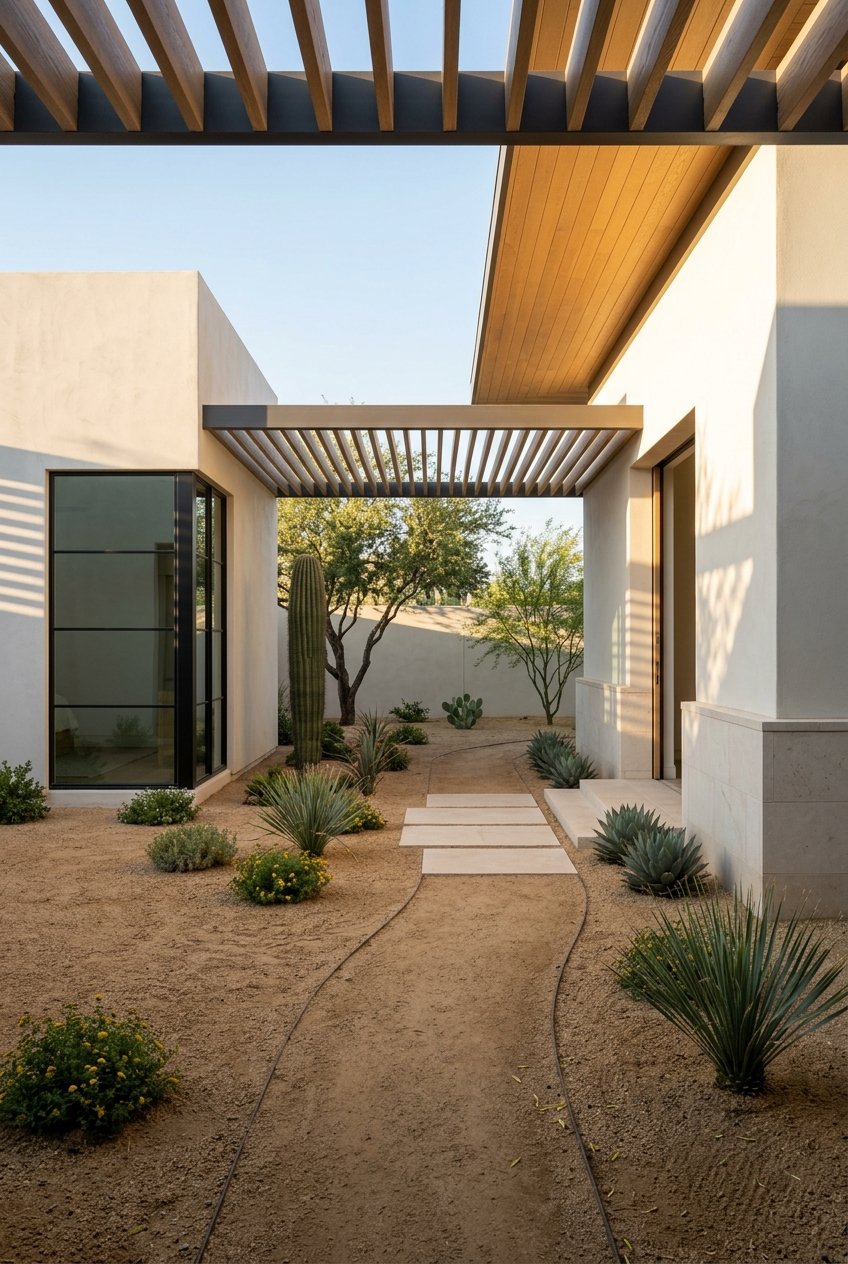
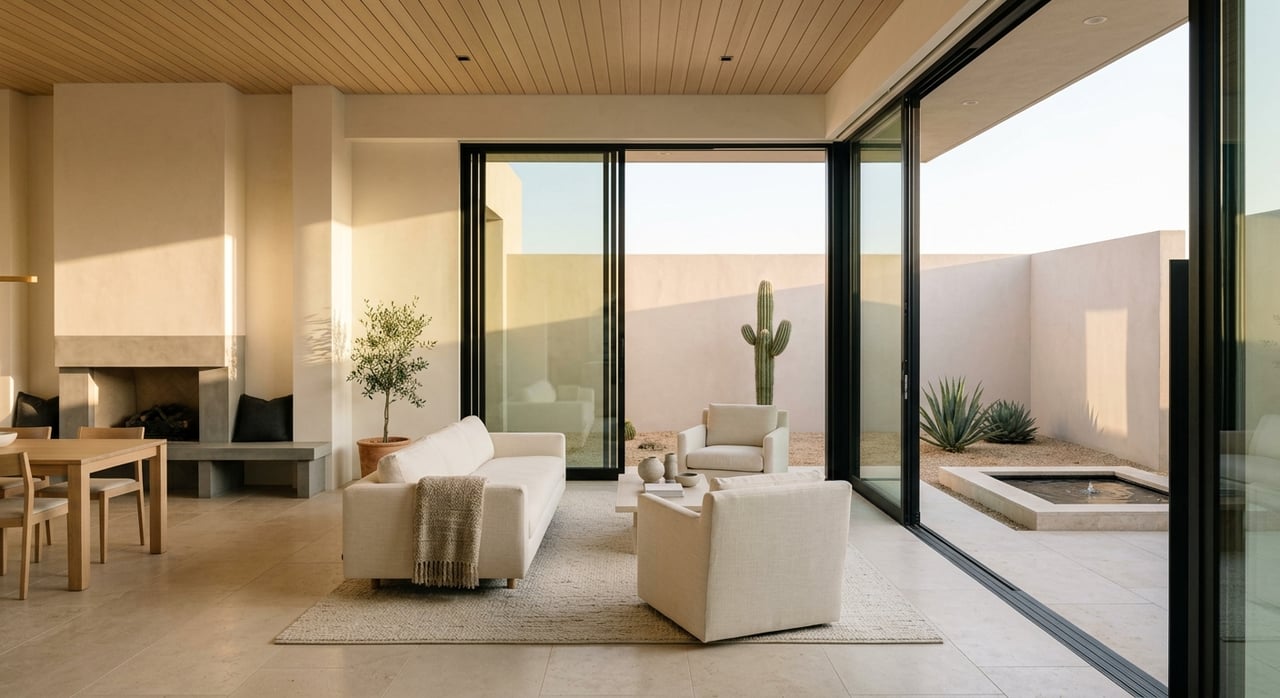
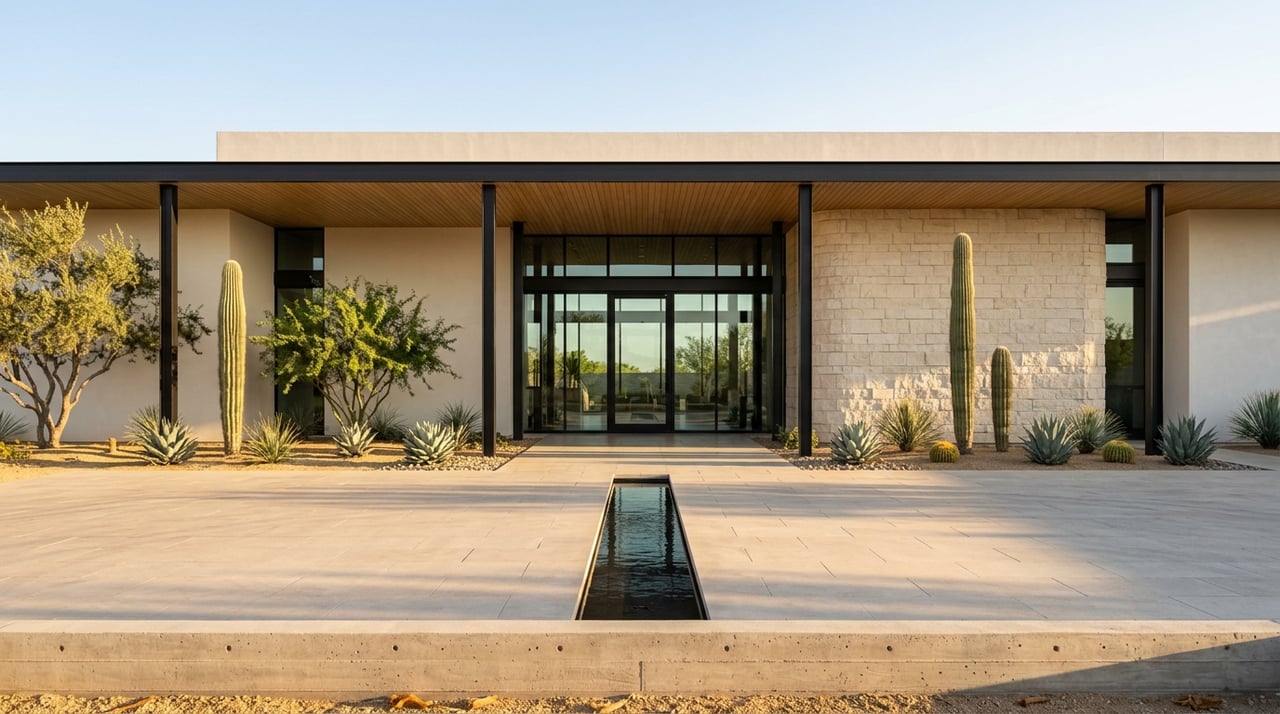
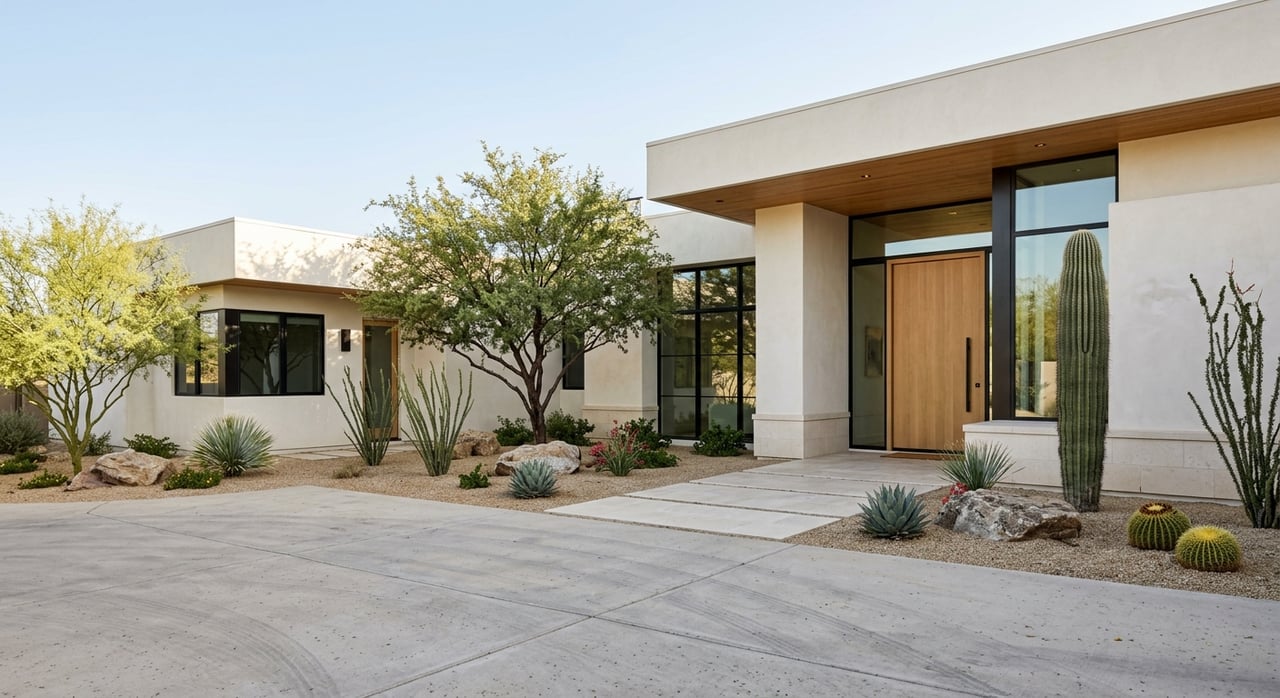
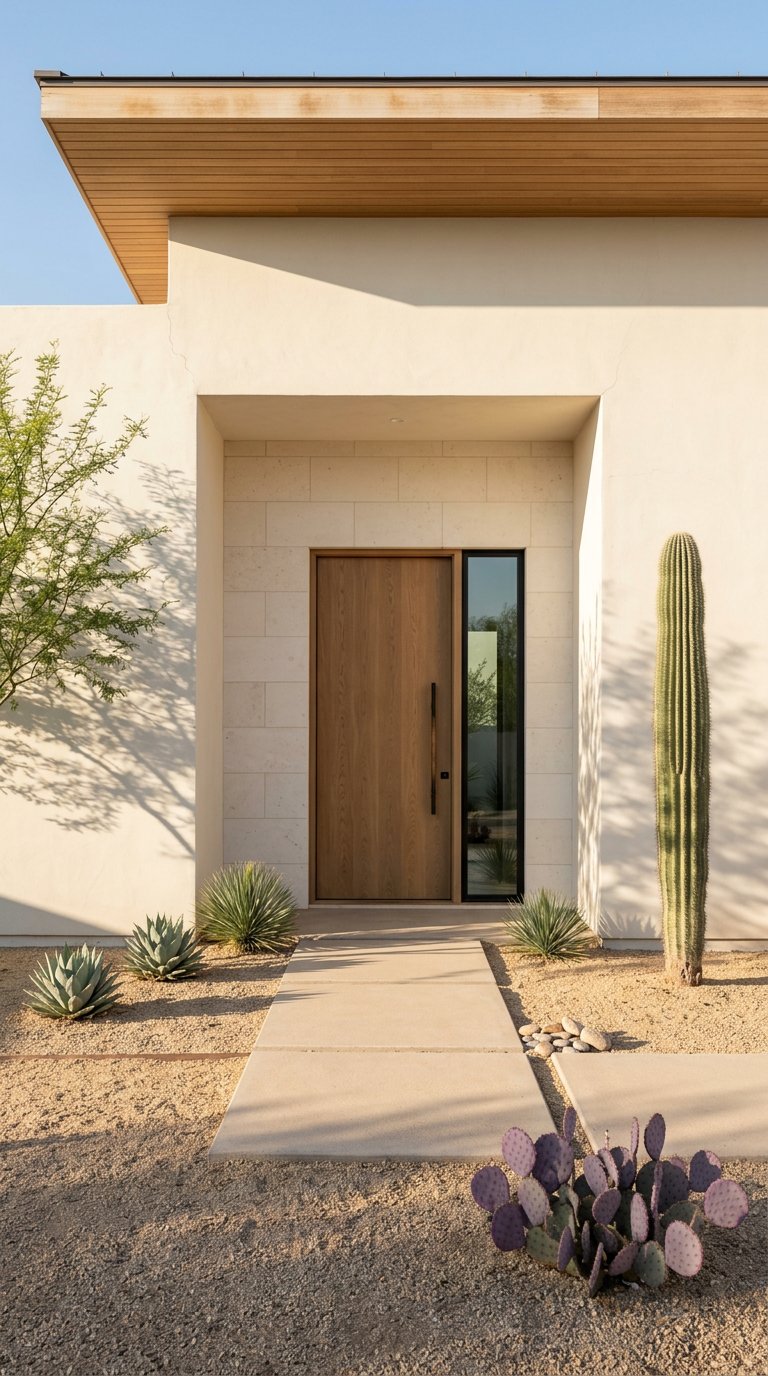
If you love clean lines and panoramic glass, Desert Contemporary is likely your match. Expect flat or low rooflines, long horizontal forms, floor-to-ceiling glazing, and deep overhangs that shade the interiors. The palette is usually natural and restrained: smooth stucco, stone, board-formed concrete, steel, and warm wood accents. This style is purpose-built for indoor and outdoor living in the desert.
Listings often mention “walls of glass,” “seamless indoor/outdoor living,” or “low roofline.” These are hallmarks of the movement. For a quick primer on how contemporary design adapts to the desert, see this overview of desert design principles. A local example that shows view framing and boulder integration is the Pinnacle Pavilion project by Drewett Works, highlighted here: modern home in Scottsdale.
What it feels like: open, panoramic, and gallery-like. Sightlines are long, outdoor rooms are extensions of the interior, and technology often supports comfort through shading systems and high-performance glass.
Southwest / Pueblo Revival / Santa Fe–inspired
If you are drawn to rounded corners and tactile finishes, you might prefer Southwest or Pueblo Revival language. Look for parapet roofs, sculpted plaster, projecting wooden beams (vigas), latillas, kiva-style fireplaces, and shaded portals that lead into courtyards. Although the look is inspired by historic adobe, most modern homes achieve it with stucco over frame or masonry that meets current codes. For a style breakdown and photos, explore this guide to organic Pueblo-style elements.
Listings often mention “Pueblo-inspired,” “vigas,” “kiva fireplace,” “saltillo tile,” or “courtyard.” These cues point to cozy public spaces and evening-friendly outdoor living under shade.
What it feels like: warm, intimate, and textural. Rooms often nest around a courtyard for privacy and microclimate, with smaller, shaded windows and sculpted details.
Territorial / Territorial Adobe
Territorial homes borrow from Pueblo massing but with crisper corners and a simplified, rectilinear look. Expect parapet rooflines, thicker-looking walls, and wood or brick accents. It reads a touch more formal than organic Pueblo while staying rooted in the regional vocabulary.
What it feels like: grounded and classic with a restrained Southwest identity. Outdoor rooms and courtyards remain central for shade and privacy.
Mid‑Century Desert Modern roots
Today’s Desert Contemporary has a lineage. Mid-century desert modernists emphasized horizontality, indoor and outdoor connections, and regional materials. A key local touchstone is Taliesin West, which shows how low-slung forms, courtyards, and filtered light shape desert comfort. Many current custom homes nod to these ideas with updated materials and glass technologies.
What it feels like: timeless simplicity, strong structure, and resort-like flow around a pool or courtyard.
Mediterranean / Spanish Colonial Revival
You will also find estates with Spanish-inspired cues: tile roofs, arched openings, stucco walls, decorative tile, and ironwork. In Pinnacle Peak this vocabulary often blends with transitional interiors or modern outdoor living layouts. Learn more about the tradition in this overview of Spanish Colonial Revival.
What it feels like: classic and romantic with arches, tile, and layered courtyards that adapt well to shaded outdoor life.
How design responds to the Sonoran Desert
Siting that honors the land
Custom homes here are often designed around boulder fields, natural washes, and long-range views. Listings that describe a house as “built into the boulders” or “nestled into the site” usually mean the architect minimized grading and preserved key natural features. This can enhance views and privacy, as seen in examples like this boulder-integrated modern home.
Passive strategies that boost comfort
Proven climate responses in hot-dry regions include orientation to control solar gain, shading with overhangs or trellises, courtyard planning, and thermal-mass materials that temper day-to-night swings. Strategic glazing is also key, often favoring south exposures with shade and minimizing unshaded west glass. Research on hot-dry climates confirms these tactics reduce cooling loads and improve comfort. For a deeper dive, see a recent review of passive design strategies in hot-dry climates.
Outdoor rooms, portals, and ramadas
Outdoor rooms extend the living season when designed for shade and airflow. In listings you will see “ramada,” “portal,” or “courtyard,” which often signal a comfortable, layered outdoor experience. Designers also use water features and native xeric plants to cool and soften these areas, as in the Pinnacle Pavilion project.
Materials and maintenance
Common materials include smooth or textured stucco in earth tones, natural stone, board-formed concrete, blackened or weathered steel accents, and large-format tile or polished concrete floors. These palettes suit the landscape and manage heat effectively. As you tour, note roof types and detailing. Flat or low-slope roofs are common in modern and Southwest homes and require proper drainage design for monsoon storms. Tile roofs and stucco finishes have different maintenance needs than metal or membrane systems, so build a plan for ongoing care.
Decoding listing language in Pinnacle Peak
- “Desert contemporary” or “desert modern.” Clean lines, deep overhangs, and large glass walls that blend indoors and outdoors. Often paired with high-performance systems and a restrained earth-tone palette. For context on the movement, explore this look at desert design principles.
- “Southwestern,” “Santa Fe,” or “Pueblo-style.” Rounded corners, parapet roofs, vigas and latillas, courtyards, and saltillo tile. Expect warm, intimate rooms and defined outdoor spaces. For visuals, see this guide to Pueblo-style elements.
- “Territorial” or “Territorial Adobe.” Rectilinear forms, parapet rooflines, and simplified ornament that reads more structured than Pueblo while keeping regional roots.
- “Casita” or “guest house.” Often a small detached or semi-detached suite. “Casita” is a marketing term. Always confirm permit and utility status since it can affect financing, insurance, rental options, and resale.
- “Kiva fireplace.” A rounded, sculpted hearth often placed in a corner. Ask whether it is decorative, gas, or wood-burning and whether current code allows use.
- “Built to the site” or “integrated with boulders.” Signals custom engineering to preserve natural rock features and views. This can limit future expansion and reflects higher initial construction complexity.
Quick checklist before you tour
- Confirm ADU or casita permits and whether utilities are separately metered if relevant.
- Identify roof type and ask about drainage detailing and maintenance schedules for monsoon season.
- Review structural considerations for hillside or boulder integration if you plan future alterations.
- Ask for HOA or Architectural Review Committee rules that govern exterior changes, finishes, and landscaping. For example, north Scottsdale communities publish long-range visions and design standards, such as DC Ranch’s planning framework.
- Check utility easements or site constraints that may affect additions, pools, or outdoor kitchens.
Finding your fit in Pinnacle Peak
If you want sweeping glass and minimal lines, Desert Contemporary offers a serene backdrop to mountain and city-light views. If you prefer sculpted walls and courtyards that come alive in the evening, Pueblo Revival and Territorial styles deliver warmth and privacy. If timeless structure and resort-like courtyards suit you, homes that nod to mid-century desert modern can be a perfect balance of history and now. Spanish-influenced estates round out the picture for buyers who love arches, tile, and classic forms.
Whichever style draws you in, focus on how design supports your daily rhythm in the Sonoran Desert. Pay attention to shade, courtyard flow, roof detailing, and how rooms orient to views. Ask the right questions up front and you will land in a home that feels tailored to both the landscape and your life.
Ready to compare styles and communities, or want eyes on a specific listing? Reach out to the Julie Jurgenson Team for one-on-one guidance, private tours, and a plan that aligns with your goals.
FAQs
What is Desert Contemporary architecture in Pinnacle Peak?
- It features low or flat roofs, long horizontal lines, large glass walls, and deep overhangs that frame views and create indoor and outdoor flow, as seen in local examples and desert design overviews.
How does the Sonoran climate influence Pinnacle Peak home design?
- Homes use shading, orientation, thermal mass, and courtyards to reduce cooling loads and improve comfort in a hot-dry climate with a summer monsoon season.
What does “casita” mean in Scottsdale listings?
- It usually refers to a detached or semi-detached guest suite; always confirm permits and utility setup since status can affect financing, insurance, and rental options.
Are flat roofs a problem in Pinnacle Peak’s monsoon season?
- Flat or low-slope roofs are common and work well when properly detailed and maintained for drainage; ask about recent inspections and service records.
What materials are common in Pinnacle Peak luxury homes?
- Expect smooth stucco in earth tones, natural stone, board-formed concrete, steel accents, and large-format tile or polished concrete floors suited to the desert setting.
How do HOAs influence exterior changes in north Scottsdale?
- Many communities use architectural review to guide palettes, landscaping, and massing; request the rules early and review examples like DC Ranch’s published planning framework.