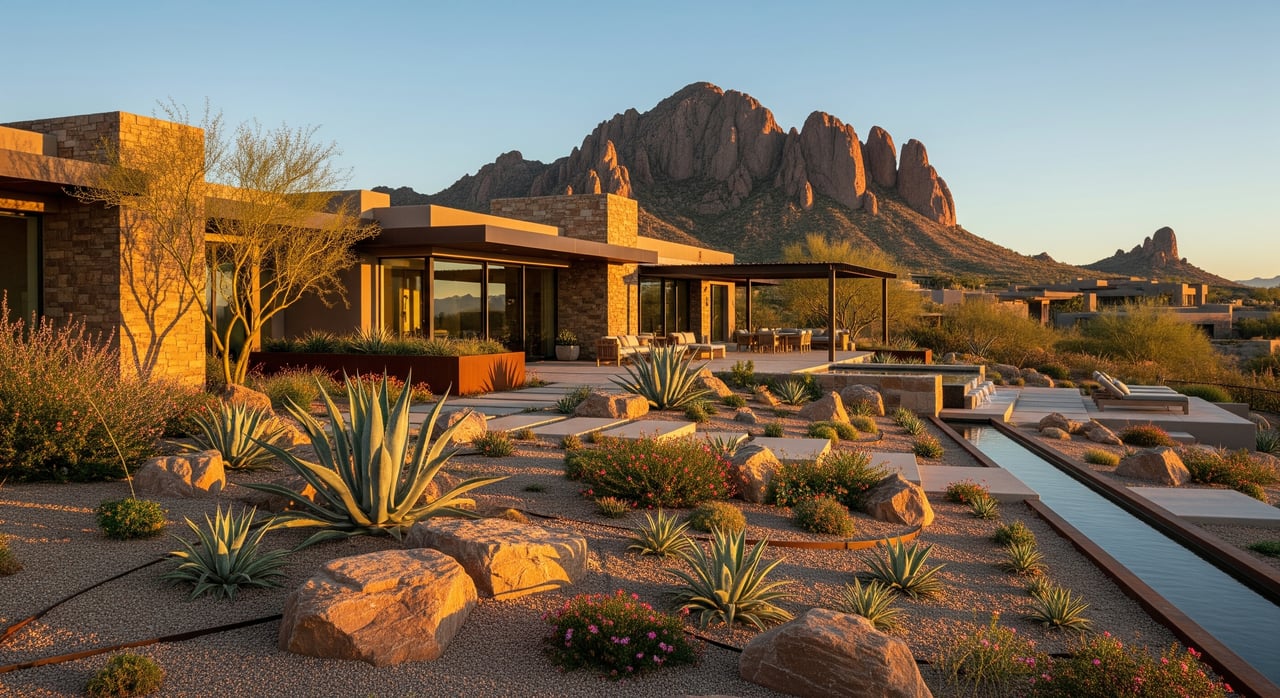
Thinking about transforming your Pinnacle Peak yard without spiking your water bill? In the Sonoran Desert, your landscape has to handle triple‑digit summers and very little rain while still looking beautiful. With the right plan, you can create a low‑maintenance, photo‑ready outdoor space that thrives year‑round and supports resale value. This guide walks you through climate‑smart design, plant choices, irrigation, and simple seasonal care so you can move forward with confidence. Let’s dive in.
Know the Pinnacle Peak climate
You live in the Sonoran Desert, where summers regularly top 100°F and humidity stays low outside the monsoon. Annual rainfall is modest, roughly 6–8 inches a year, mostly in winter and during the summer monsoon. The area sits in USDA zones 9b–10a, so frost is rare but still possible. Designing for heat, sun, and limited water is the key to success.
Local soils are typically alkaline and sandy to sandy‑loam, with caliche layers in places. Compacted areas can reduce infiltration, so loosening soil in planting zones helps roots establish. Pay attention to microclimates: south and west exposures are hottest and driest, while north and east sides offer cooler spots for denser planting. Hard surfaces like walls and driveways store heat, so choose plants and materials that can handle radiant warmth.
Plan for rules and approvals
If your home is in an HOA, review CC&Rs before starting. Many communities regulate front‑yard aesthetics, approved plant lists, rock colors, turf limits, and major hardscape features. Secure approvals for changes like walls, large trees, new irrigation mains, or grading. Permits may be required for certain structures, so check municipal codes early.
Water is the limiting resource here, and your local utility may have seasonal watering schedules or rebates for efficiency upgrades. Smart controllers, high‑efficiency nozzles, and turf‑to‑desert conversions often qualify for incentives. Confirm current rules and programs with your water provider before you design.
Design a water‑wise layout
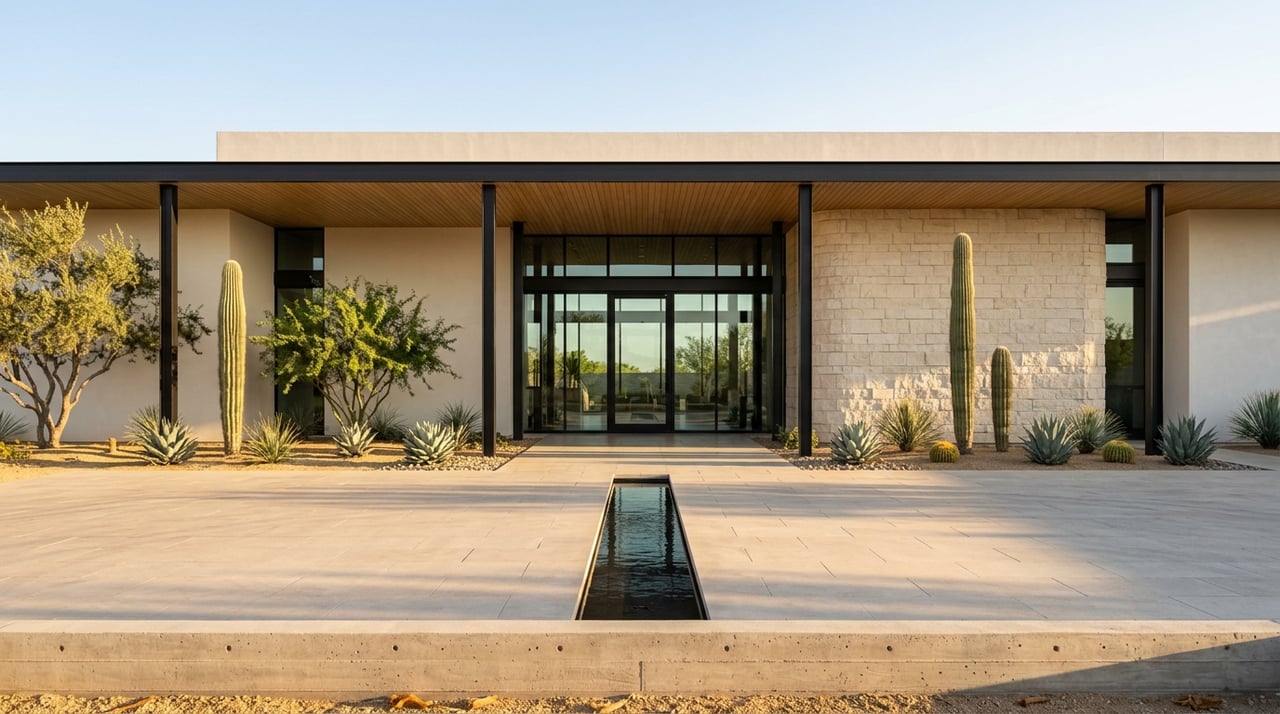
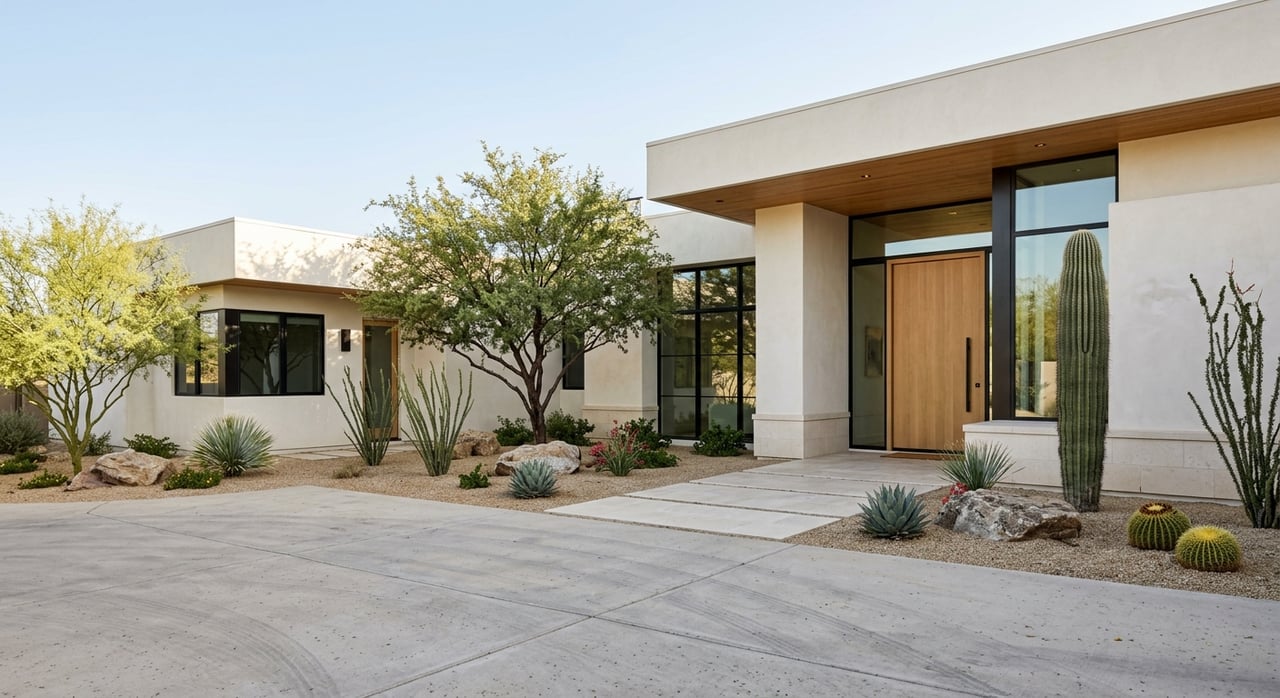
Focus on structure, texture, and year‑round interest rather than full lawns. Right plant, right place is the rule. Group plants by similar water needs, known as hydrozoning, so irrigation stays efficient. Use layers for depth: canopy trees for shade, mid‑story shrubs for texture, groundcovers and gravel to define space, and sculptural succulents or cacti for focal points.
Limit turf to small functional areas, if any. If synthetic turf is allowed by your HOA, install it with proper base and drainage so it stays cool and drains well. Use hardscape strategically with decomposed granite paths, boulders, and simple pavers in colors that match your home. Keep edges clean between gravel, beds, and any turf, because crisp lines read well in person and in photos.
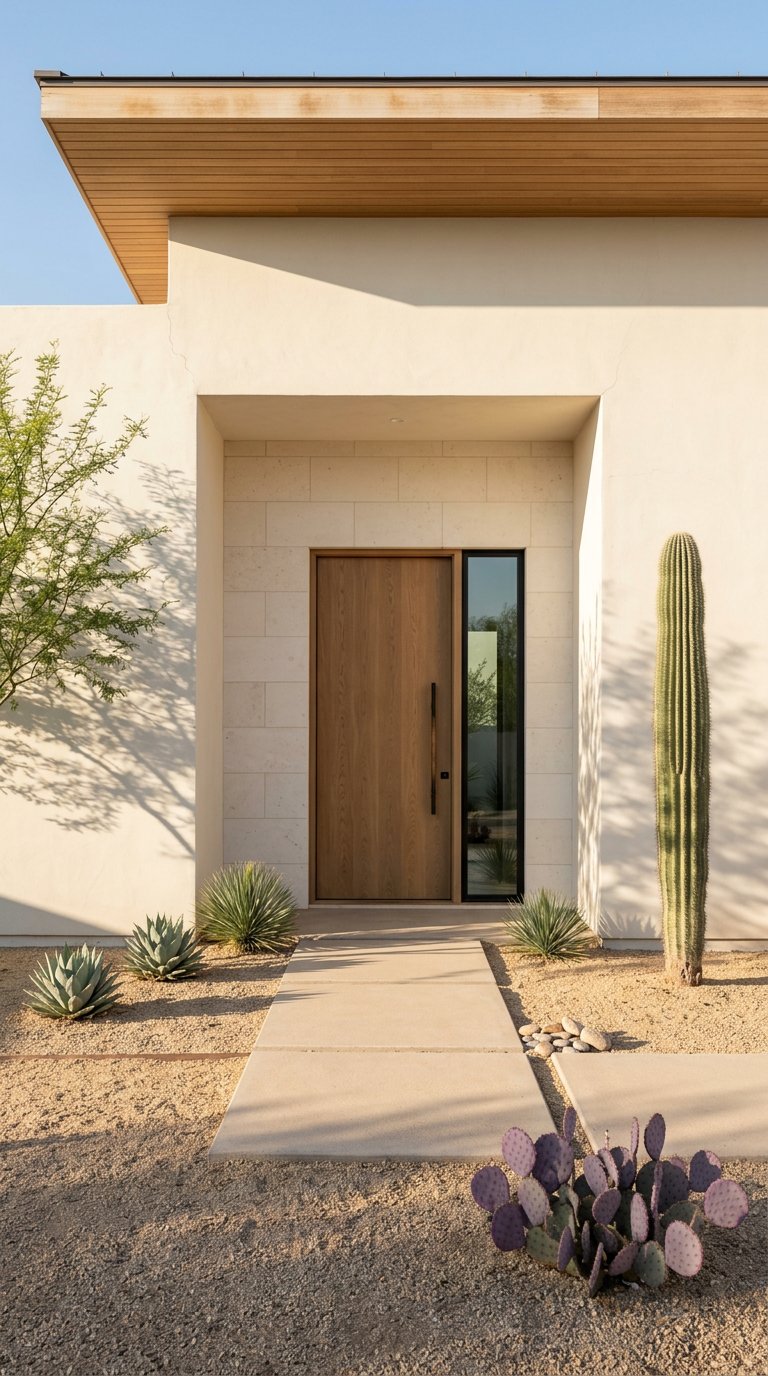
Plan for seasonal interest by mixing winter and spring bloomers with plants that pop during the monsoon. A single bold focal element, like an agave or ocotillo, can anchor your front yard from the street and boost curb appeal.
Choose plants that thrive here
Select Sonoran natives and regionally adapted plants that handle heat and need little water once established. Group them by water need and solar exposure. Always allow room for mature size and keep spiny plants away from walkways.
Trees for shade and structure
- Desert palo verde (native): Bright yellow spring bloom and light, filtered shade that supports underplanting.
- Velvet mesquite (native): Attractive canopy and multi‑stem character. Note that seedpods can create litter, which is a tradeoff for its strong shade.
- Desert willow (native to the region): Fast to establish with tubular flowers that attract hummingbirds.
- Ironwood (native): Long‑lived with slower growth and a refined look.
Placement tips: Allow for mature spread and keep a safe distance from foundations, driveways, and pool decks. Check HOA guidelines for approved species and allowable tree locations.
Shrubs and perennials for color
- Brittlebush (native): Silvery foliage and seasonal color with low water needs.
- Apache plume and Desert lavender (native): Textural shrubs that handle heat and add movement.
- Baja ruellia and Desert marigold: Reliable color with minimal water needs once established.
- Nectar plants for pollinators: Red bird‑of‑paradise, Fairy duster, Penstemon, and Salvia species.
Note: Texas sage and some other popular shrubs are not Sonoran native but are regionally adapted and perform well when sited and irrigated correctly.
Succulents and cacti as accents
- Agaves (such as Agave parryi), yucca, sotol, and ocotillo supply sculptural focal points.
- Prickly pear, cholla, and hedgehog cacti offer iconic desert form and seasonal blooms.
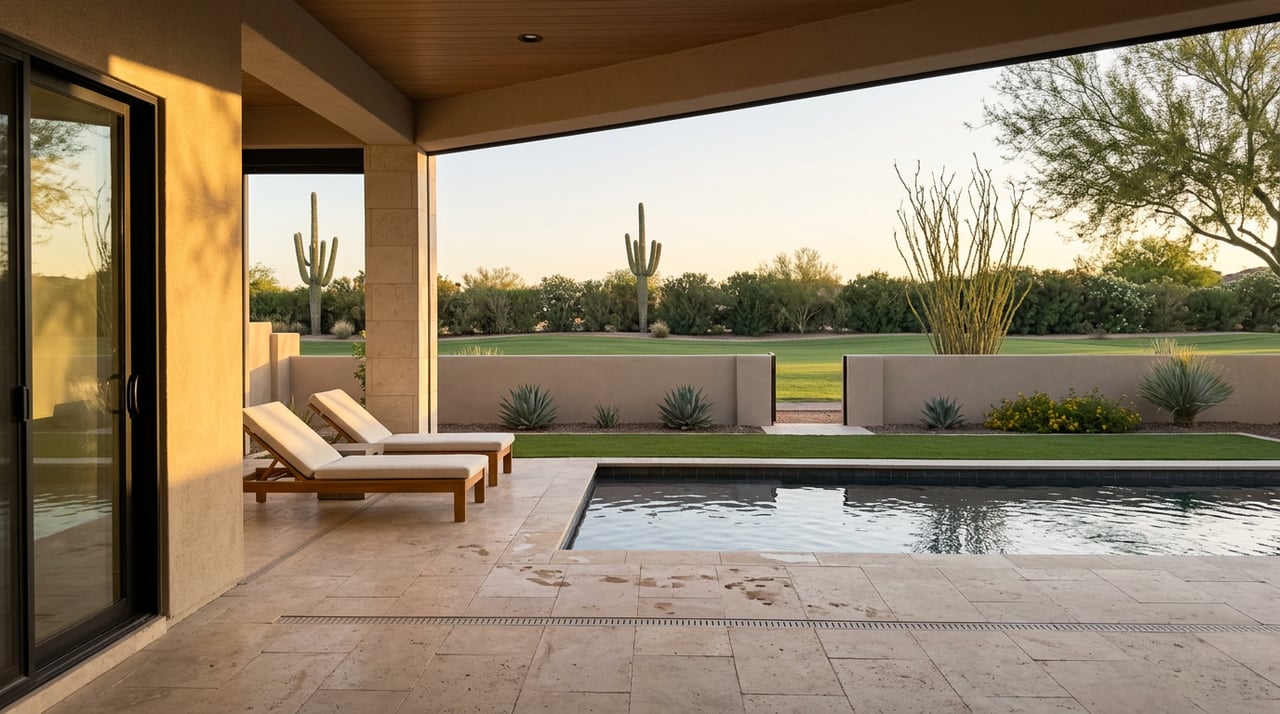
Safety tip: Keep spiny plants well away from foot traffic, play areas, and pool decks. Provide clear sightlines at entries and driveway edges.
Groundcovers and grasses
- Deer grass (Muhlenbergia rigens) for massing and movement.
- Globe mallow for bursts of color.
- Dymondia is a drought‑tolerant, non‑native option for tough, sunny areas.
Instead of dense, thirsty groundcovers, use gravel or rock mulch with low, widely spaced plants to create a clean, airy desert aesthetic.
Turf alternatives
Minimize turf. Where you want lawn for pets or play, choose warm‑season, drought‑tolerant grass, historically bermudagrass in the region. If your HOA allows synthetic turf, install it with a proper base and drainage. Keep turf areas small and functional, not ornamental.
Install the right way
Soil preparation and planting
Loosen soil beyond the root ball to encourage outward root growth and blend in some organic matter at planting holes. Avoid over‑amending large backfill areas that could trap water. The best planting windows are fall and late winter or early spring so roots establish before peak heat. Avoid major planting in summer unless you can provide reliable irrigation and heat protection.
Irrigation best practices
- Use drip irrigation for trees and shrubs, with separate hydrozones for trees, shrubs, succulents, and any turf.
- Smart controllers and soil moisture sensors help prevent overwatering and often meet conservation program recommendations.
- In winter, cut back frequency. In summer, water deeply but less frequently to train deep roots, though overall frequency increases due to high evapotranspiration. Exact run times depend on soil, plant size, and emitter flow, so adjust based on plant response or consult a certified pro.
Mulch, rock, and hardscape
Coarse rock and decomposed granite are standard and look clean. Avoid large expanses of dark rock next to south or west walls, which can raise temperatures. In shadier beds, organic mulch improves infiltration and soil life. Keep mulch away from trunks and succulent crowns to prevent rot.
Seasonal care made simple
- Spring (Feb–Apr): Prune dead wood and storm damage, tidy winter debris, and test your irrigation before heat arrives. Use minimal, slow‑release fertilizer only if needed.
- Summer (Jun–Sep, monsoon): Monitor irrigation closely and watch for fungal issues after heavy rains. Support pollinators with flowering plants and avoid heavy pruning.
- Fall (Oct–Nov): Prime time for new planting and larger projects. Reduce irrigation as nights cool.
- Winter (Dec–Jan): Water infrequently and protect tender new plantings with frost cloth during rare cold snaps.
Common issues: Drought stress can invite spider mites and scale on shrubs, while overwatering leads to root rot in poorly drained spots. If irrigation water quality causes salt buildup, consider soil testing and choose salt‑tolerant species. Be mindful that mesquite and palo verde trees can drop pods and litter, so plan maintenance accordingly.
For resale and photos
Buyers respond to simple, low‑maintenance front yards that look tidy and balanced. Keep edges crisp, gravel weed‑free, and prune for form rather than over‑shearing. Add one memorable focal element that is visible from the street. For listing photos, shoot at golden hour, remove hoses and clutter, and stage a shaded seating area to showcase usable outdoor living.
A 7‑step quick‑start plan
- Review HOA CC&Rs and request approvals if needed.
- Confirm local watering schedules and any rebates for smart irrigation or turf conversion.
- Map sun exposure and create hydrozones by grouping plants with similar water needs.
- Choose your structure: 1–2 canopy trees, 5–7 shrubs, and 3–5 sculptural accents sized for maturity.
- Select a consistent gravel color and a few boulders to define space and add dimension.
- Install drip irrigation with a smart controller and label each zone.
- Schedule planting for fall or late winter, then set seasonal reminders for irrigation checks and light pruning.
Ready to create a desert‑smart yard that elevates your home’s curb appeal and shows beautifully when you sell? Reach out to the Julie Jurgenson Team for local guidance on outdoor improvements that resonate with Pinnacle Peak buyers.
FAQs
What is desert‑smart landscaping in Pinnacle Peak?
- It is a design approach for the Sonoran Desert that emphasizes low water use, heat‑tolerant plants, efficient drip irrigation, and clean, low‑maintenance hardscape.
How often should I water desert plants in summer?
- Use deep, infrequent watering on drip, but increase frequency in summer due to high evapotranspiration; a smart controller and soil moisture checks help you fine‑tune.
Which native shade trees work best near Pinnacle Peak homes?
- Desert palo verde, Velvet mesquite, Desert willow, and Ironwood perform well when sited correctly, with the tradeoff that some trees produce seasonal litter.
Do HOAs in Pinnacle Peak allow synthetic turf?
- Many HOAs regulate turf area and synthetic turf materials, so check your CC&Rs and submit for approval, and ensure proper base and drainage if allowed.
When is the best time to plant in the Sonoran Desert?
- Plan most planting for fall or late winter to early spring so roots establish before extreme heat, and avoid major summer installs when possible.
Are cacti safe to plant near pools and walkways?
- Keep cacti and agaves set back from paths, entries, and pool decks to prevent injuries, and use non‑spiny plants where people pass closely.